
Hydraulic Attachments — Rock Breakers
Hydraulic Attachments — 0.8–85 Ton Excavators
VANROCK
Rock Breakers
VANROCK excavator rock breakers are versatile impact devices engineered to break any type of rock or concrete, regardless of its hardness or physical properties. Their wide range of applications includes demolition, deconstruction, primary and secondary rock excavation, trenching, foundation work, asphalt cutting and more.
Applications
HD / TX — Series
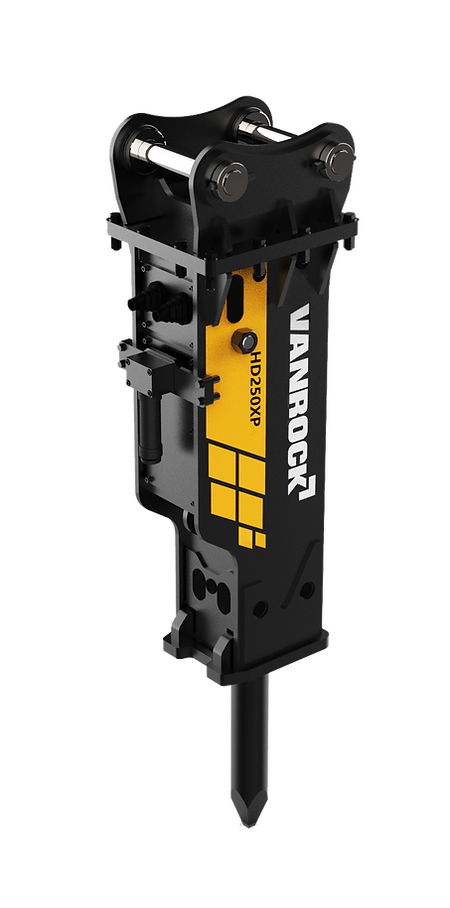
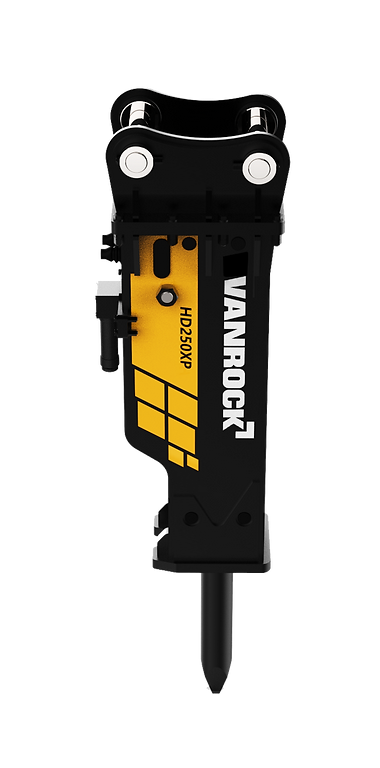
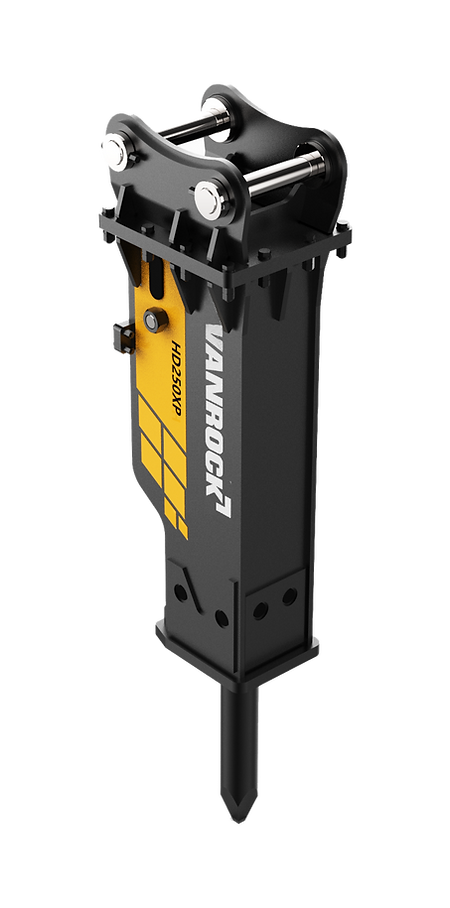
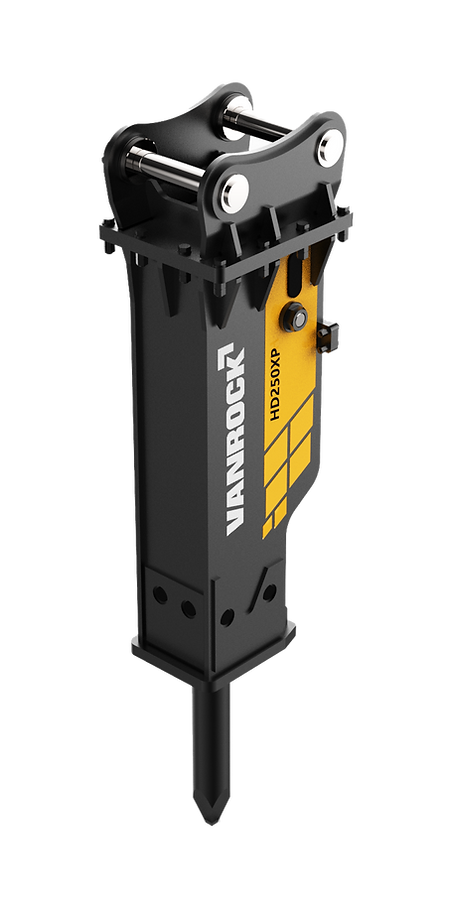
Two-stroke selector — optional
Switch between long and short stroke to match the application.
TPC valve case
Total Power Control — balanced, durable, 6-bolt fastened valve plate.
Auto ABF system — optional
Anti blank firing protects chisel points, bolts and front heads.
NOK sealing system
High-quality NOK seals for a longer seal life than competitors.
The Series
VANROCK rock breaker series
Seventeen HD models covering carriers from 0.8 to 85 tons — silent and powerful, from compact machines to mining-class excavators.
Filter by product
17 / 17 models
Machine type
Carrier range
Units
0.8–4.5 Ton
Compact silenced breakers for mini excavators — engineered for interior demolition, landscaping and utility trenching where low weight and precise control matter most.
VR-HD 10
 Excavator0.8–1.5 Ton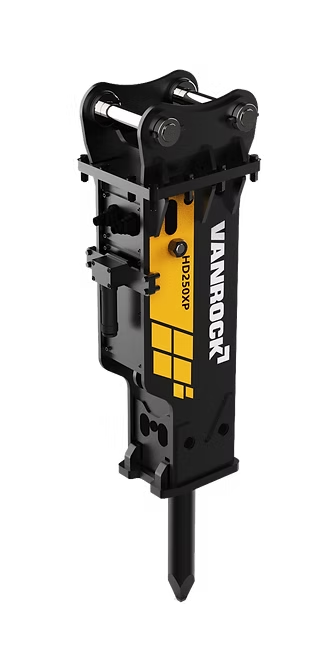
Carrier
0.8–1.5 Ton
Operating weight
120 kg
Tool diameter
Ø36 mm
Pressure
90–110 bar
Oil flow
15–30 LPM
Impact rate
700–1300 BPM
Impact power
220 J
Hose size
1/2"
Engineering
Why the VANROCK rock breaker?
Nine engineering decisions that make it the breaker of choice from 0.8 to 85 tons.
Our innovative 2-stroke selector empowers users to seamlessly transition between long stroke and short stroke options based on the specific performance requirements of their application.
Know-how
Hydraulic breaker know-how
How a hydraulic breaker works
A hydraulic breaker converts the excavator's oil flow into high-frequency impact energy. A piston, driven by hydraulic pressure and a nitrogen gas charge, strikes the working tool, and the tool transmits that shock into the rock or concrete until it fractures.
- Impact energy vs frequency: bigger pistons hit harder but slower; smaller breakers hit faster with less energy per blow — hard, massive rock wants energy, thin concrete wants frequency.
- The carrier feeds the breaker: correct oil flow and pressure decide whether the breaker delivers its rated performance — a starved breaker underperforms and overheats.
- Down-force matters: the tool must be pressed firmly onto the material so blow energy travels into the rock, not back into the breaker and boom.
- Blank firing — striking with no material resistance — is the top cause of premature wear; operating technique and anti-blank-firing features protect the investment.
Choosing the right breaker
Breaker sizing is carrier-first: the excavator's weight class sets the breaker class, then the material fine-tunes the choice.
- Carrier weight rule: the breaker (with tool and bracket) should sit within the manufacturer's stated carrier range — too heavy destabilizes the machine, too light and the carrier's own weight overdrives the breaker.
- Match oil flow: verify your auxiliary circuit's flow and pressure against the breaker's requirement before anything else.
- Material: massive, abrasive rock favors a heavier breaker with a blunt tool; reinforced concrete demolition favors a moil or chisel point and moderate energy.
- Tool selection: moil point for concrete and soft rock, chisel for trenching direction control, blunt for hard rock breaking by energy transfer.
- Duty cycle: for production breaking (quarry secondary, mass demolition), step up a size class and fit the appropriate wear package.
Where hydraulic breakers earn their keep
A breaker turns an excavator into a demolition and rock-excavation machine wherever blasting is impossible or uneconomic.
- Demolition: foundations, slabs, walls and reinforced structures — break first, then process with a crusher bucket to close the recycling loop on site.
- Trenching and pipeline work in rock: break the ledge as you dig, without drill-and-blast permits and exclusion zones.
- Quarry secondary breaking: reduce oversize at the face instead of feeding blockages to the primary crusher.
- Urban and confined sites: controlled impact where vibration limits, neighbors or utilities rule out blasting.
FAQ
Rock Breakers FAQ
Start with the carrier's operating weight — every breaker has a stated carrier range, and staying inside it protects both machines. Then confirm your auxiliary hydraulic flow and pressure meet the breaker's specification. Finally consider the material: massive hard rock justifies the top of the range with a blunt tool; general demolition sits comfortably mid-range with a moil point. VANROCK dealers size the breaker to your exact machine model before quoting.
More answers from our Q&A
Related Parts
Related Parts
Genuine VANROCK parts and accessories for rock breakers — available through the dealer network.
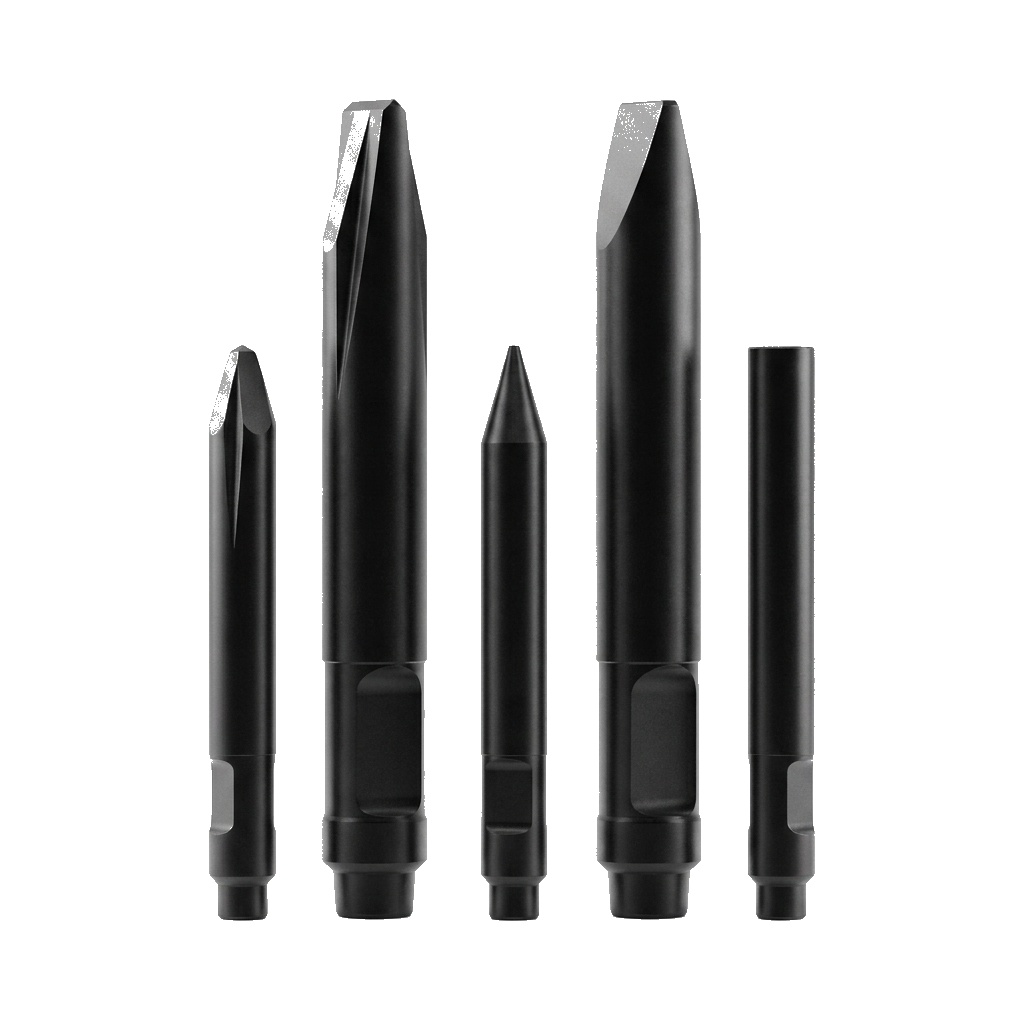
Working Tools
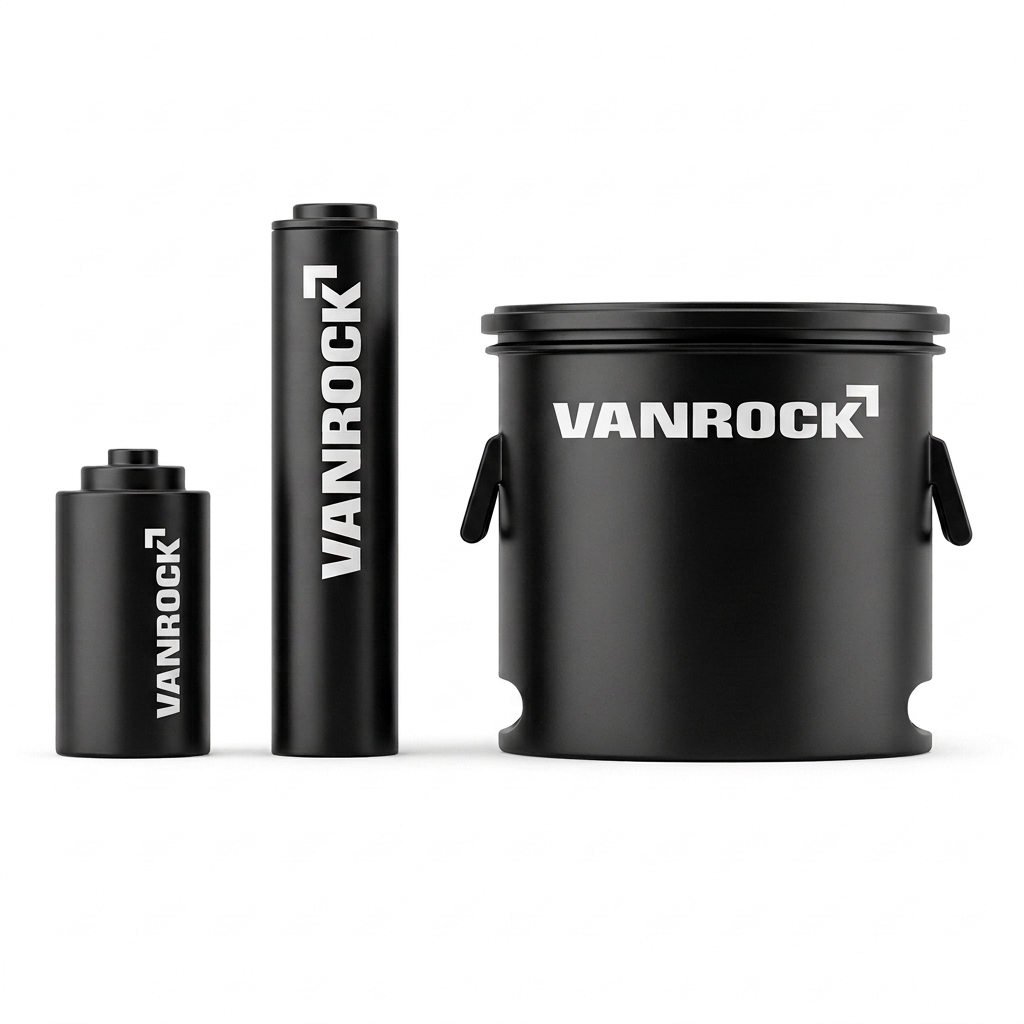
Chisel Paste
Ready To Start
Ready to get started?
Contact our sales department today — we will be happy to assist you further.