
Hydraulic Attachments — Drum Cutters
Hydraulic Attachments — 0.5–70 Ton Excavators
VANROCK
Drum Cutters
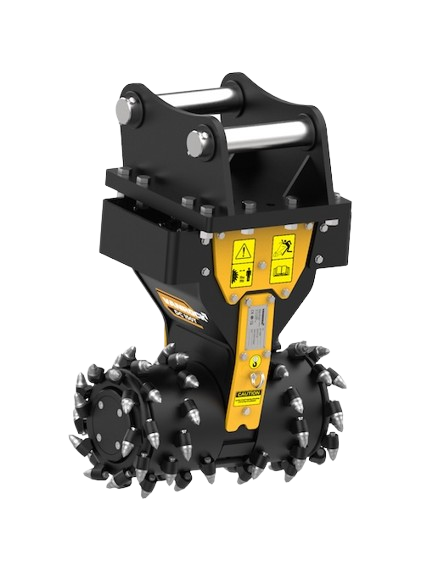
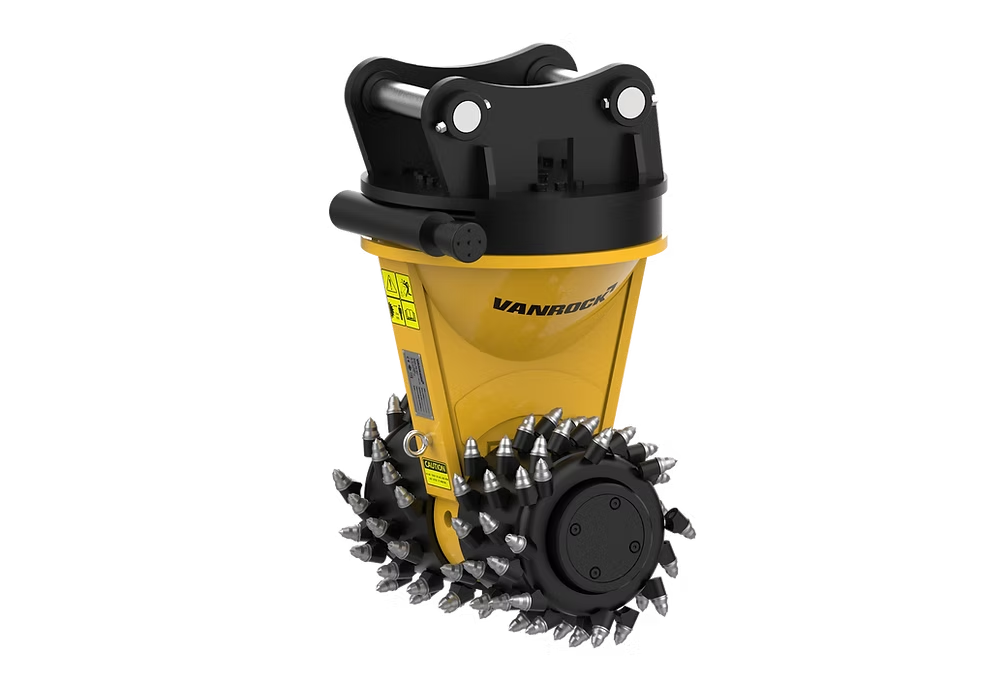
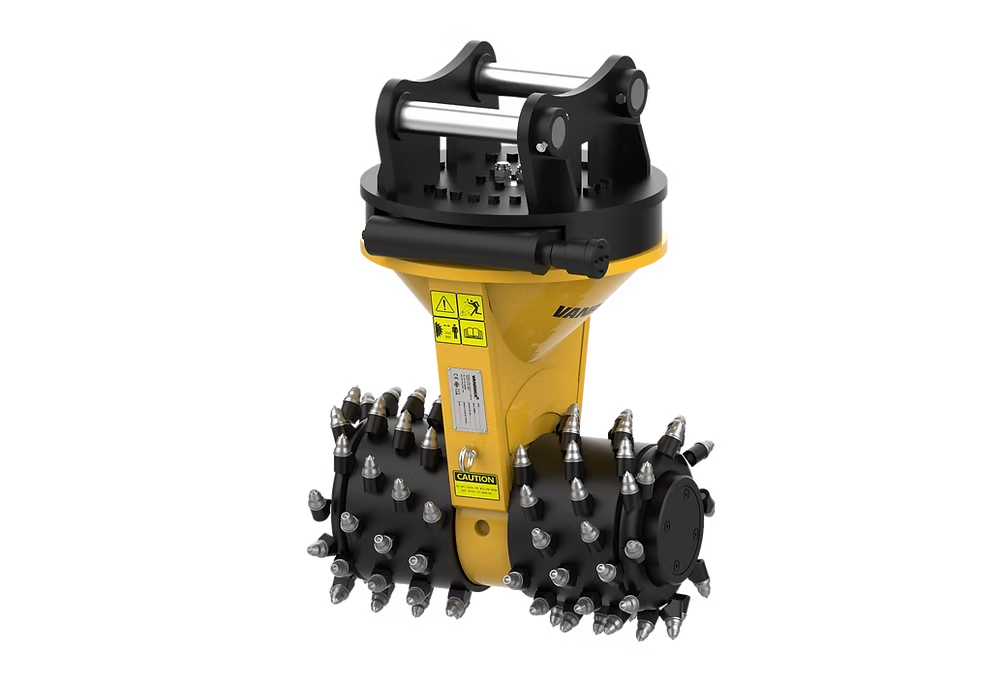
VANROCK Drum Cutters bring even more control and precision to the operator. This versatile attachment can be used across a vast range of applications — surface profiling, trenching, soft rock and frozen soil demolition, excavation, quarrying and underwater excavations. The transverse drum cutter is an alternative to the hydraulic rock breaker, offering less noise and vibration.
Applications
AT / DC / CH / RU — Series



High torque hydraulic motor
For high productivity.
Optimized pick pattern
For less wear and higher productivity.
Wear-resistant plates
For the protection of the central body.
Water resistant
Suitable for underwater work. 360° rotation models available.
The Series
VANROCK drum cutter series
Twenty models across four series — axial, traverse, cutter heads and rotation units — covering carriers from 0.5 to 70 tons.
Filter by product
20 / 20 models
Machine type
Applications
Materials
Series
Units
AT — Axial
Axial (in-line) drum cutters — the cutting drum rotates around the same axis as the excavator stick, ideal for trench walls, pipe trenches, tunnel profiling and precise surface milling in confined spaces.
VR-AT 20
 Excavator0.5–2 Ton
Carrier
0.5–2 Ton
Max power
20 kW
Max flow
75 LPM
Rec. flow
27–60 LPM
Max pressure
205 bar
Output torque
1870 Nm
Shaft speed
105 RPM
Weight
120 kg
Cutter bits
28 pcs
Engineering
Why the VANROCK drum cutter?
Six engineering decisions that deliver control, precision and durability.
A high torque hydraulic motor drives every VANROCK drum cutter for high productivity across profiling, trenching and excavation work.
Know-how
Drum cutter know-how
How a drum cutter works
A drum cutter (twin-header) mounts a hydraulic motor between two rotating drums laced with pointed picks. Instead of shattering material by impact, it grinds rock, concrete or frozen ground away in a controlled milling action.
- Cutting, not striking: material is removed as small chips at low vibration — the property that lets drum cutters work beside sensitive structures, under water and in tunnels.
- Rock strength window: drum cutters excel in low-to-medium strength rock and unreinforced concrete; in very hard, massive rock a breaker or saw is the better tool.
- Pick lacing and rotation speed determine the finish: profiling a tunnel wall and mass excavation use different setups of the same machine.
- The spoil is fine and reusable, and there's no flying debris — a genuine advantage on urban and remediation sites.
Choosing the right drum cutter
Size to the carrier and the rock, then decide the drum style for the job's geometry.
- Carrier class: cutter weight and torque must match the excavator's weight class and auxiliary hydraulics — flow drives productivity more than pressure here.
- Know your rock: get the unconfined compressive strength (UCS) of the material; it decides whether a drum cutter cuts economically or just polishes the face.
- Drum type: standard twin drums for trench walls and mass profiling; cutter-head configurations for confined precision work.
- Water and dust: for underwater or dust-controlled work, specify the appropriate sealing and spray options at order time.
- Pick management: carry the correct spare picks and rotate them — cutting with worn picks multiplies fuel burn and slows advance dramatically.
Where drum cutters earn their keep
Wherever impact is forbidden, too rough or too imprecise, milling wins.
- Trenching in rock and hard soil: clean, straight-walled trenches without overbreak or blast permits.
- Tunnel and shaft profiling: shaping walls, niches and cross-passages with millimeter-level control.
- Concrete renovation: removing damaged concrete layers from structures while leaving sound material and rebar intact.
- Frozen ground and soft-rock demolition: continuous production where breakers chatter and buckets bounce.
- Underwater excavation: dredging and profiling below the waterline where impact tools lose most of their energy.
FAQ
Drum Cutters FAQ
Match the cutter's weight class to your excavator's operating weight, and — critically for milling attachments — match its hydraulic flow demand to your auxiliary circuit, because a drum cutter converts flow directly into cutting speed. An undersupplied cutter still turns, but production falls off a cliff. VANROCK dealers verify carrier weight, flow and pressure against your machine before quoting.
More answers from our Q&A
Custom Solutions
Can't find the ideal drum cutter for your application?
We provide custom solutions to all our customers and offer drum cutters that you can take advantage of.