
Hydraulic Attachments — Rock Saws
Hydraulic Attachments — 1–60 Ton Excavators
VANROCK
Diamond Rock Saws
Equipped with diamond tipped blades, VANROCK Rock Saws are ideal for cutting sandstone, reinforced concrete, granite, limestone, hard limestone and even metal parts.
Applications
VR-RT — S / DB / GT Series
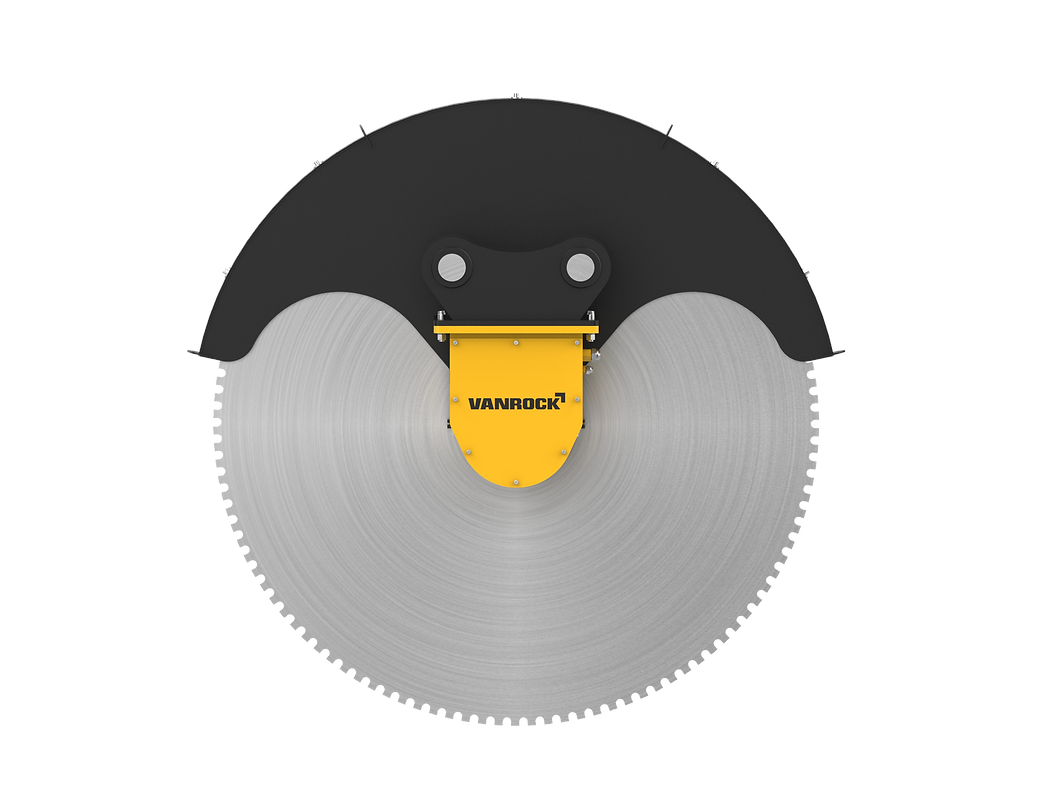
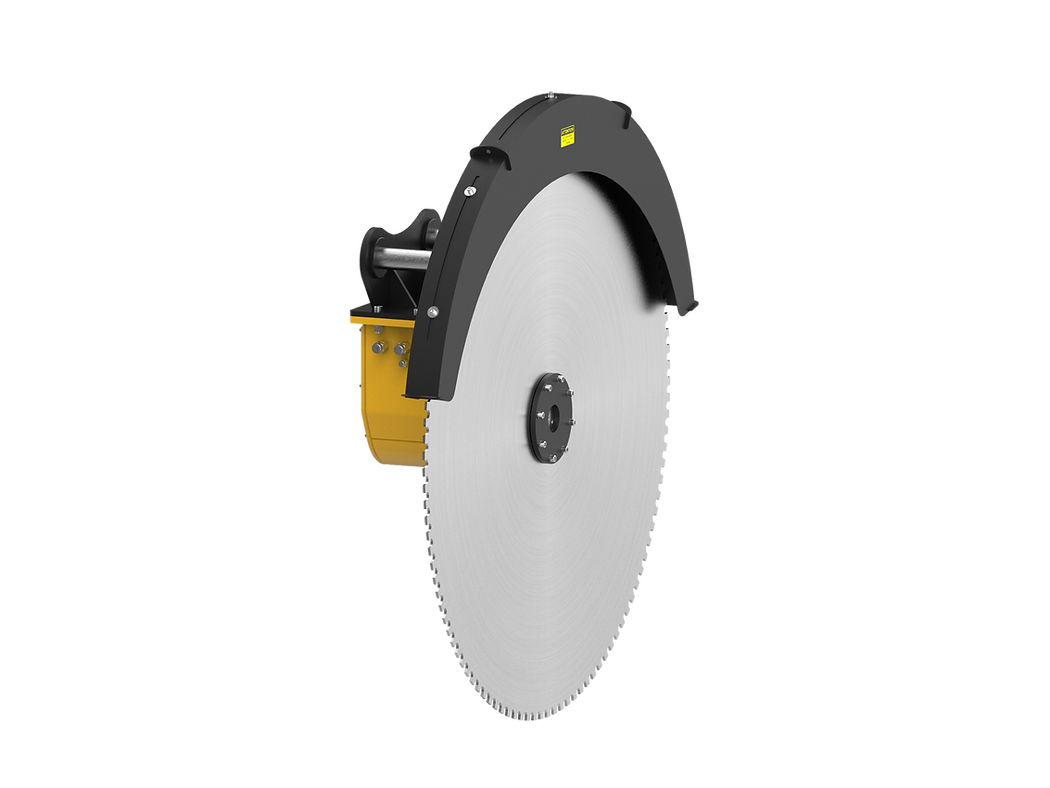
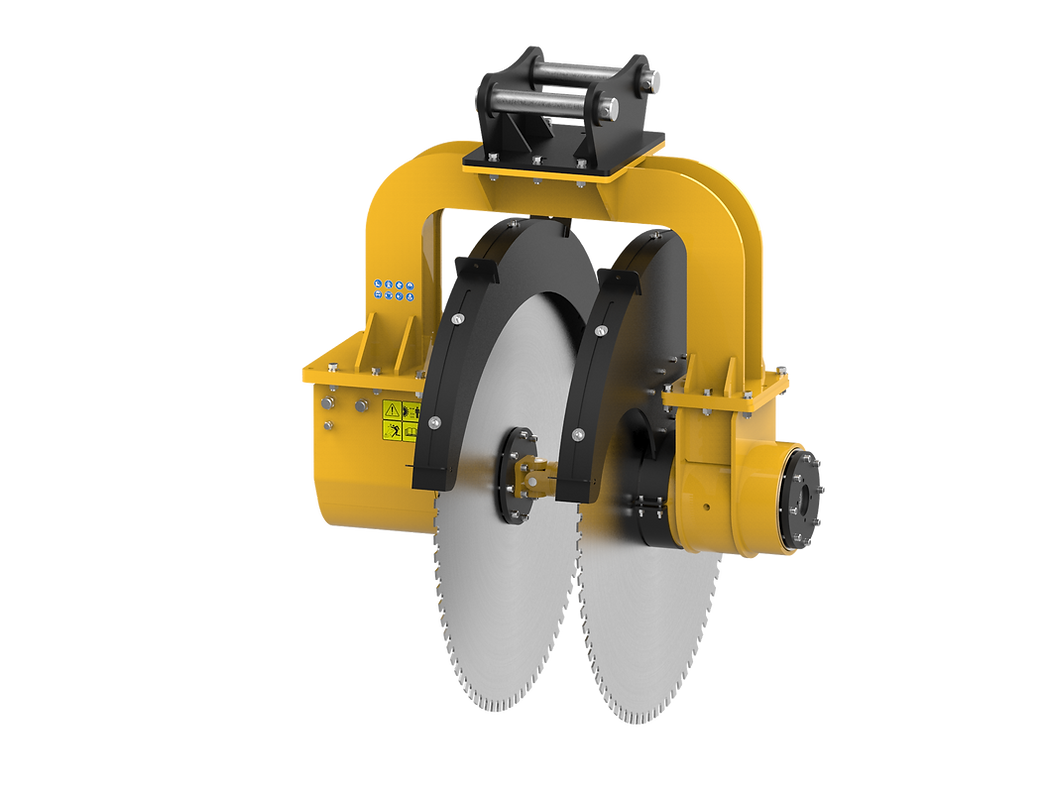
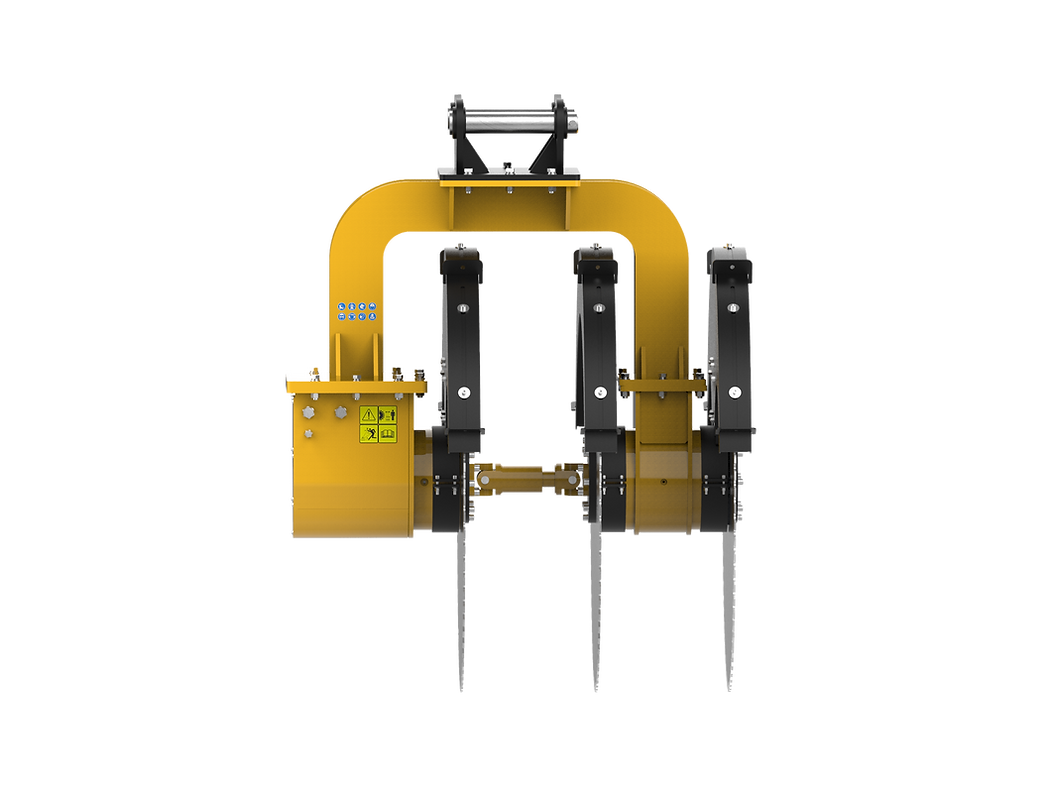
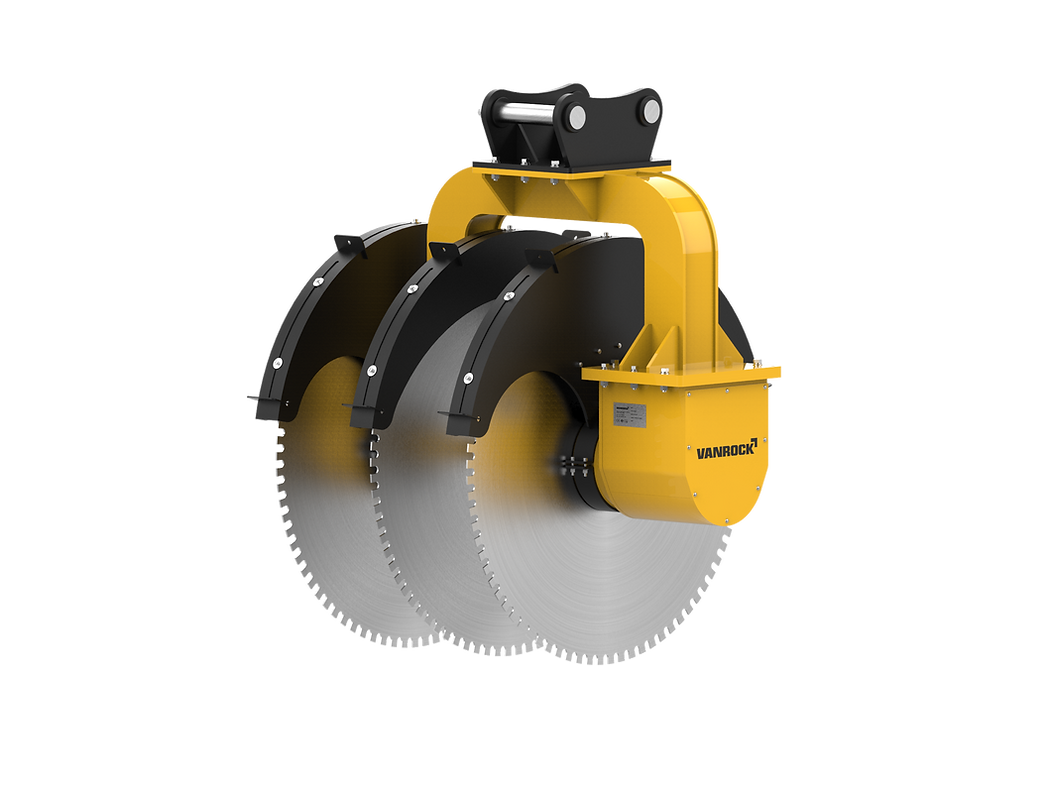
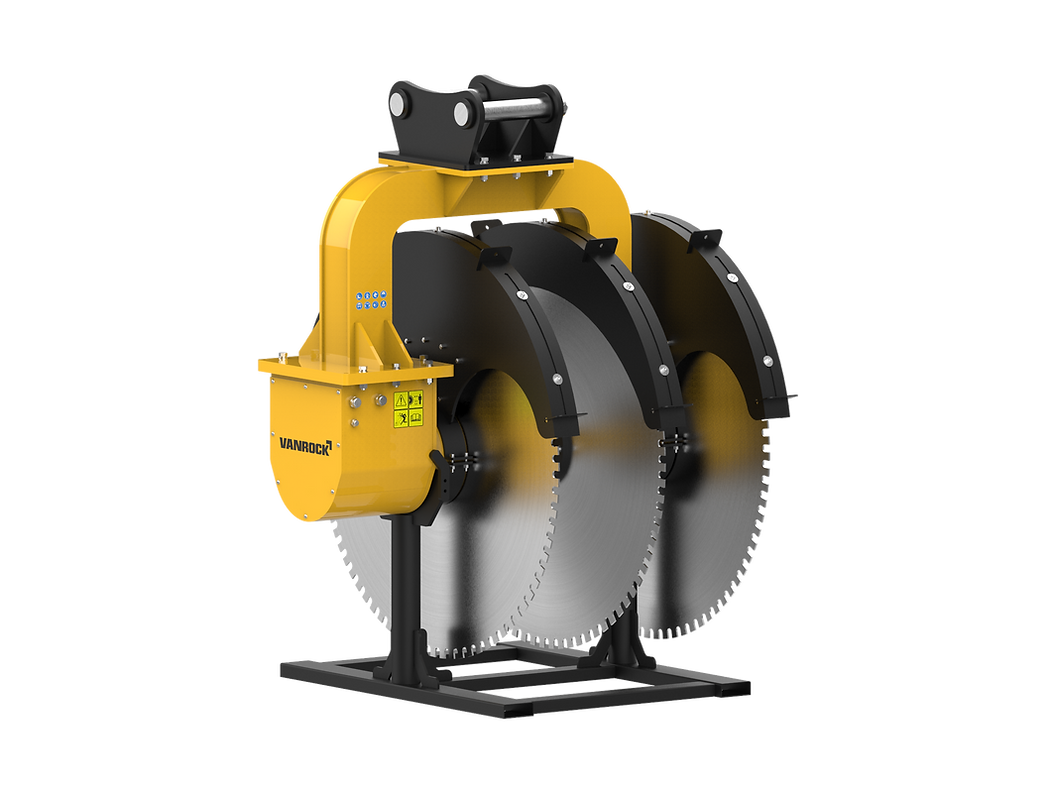
Diamond tipped blades
Effective for cutting through tough materials.
Automatic blade braking
Prevents blade breakage.
Bi-directional rotation
Clockwise and anti-clockwise for added flexibility.
360° rotating blade cover
Easy manoeuvrability and maximum protection. 180° rotatable head bracket.
The Series
VANROCK rock saw series
Fifteen models across single, double and triple blade series — for granite, basalt, marble and reinforced concrete.
Filter by product
15 / 15 models
Machine type
Series
Units
Single Blade
One diamond-tipped blade for clean, narrow cuts — precision trenching in rock and concrete with minimal overbreak, vibration and noise.
VR-RT 10S
 Excavator1–4 Ton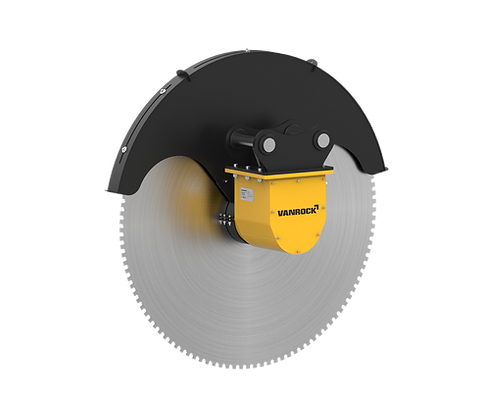
Carrier
1–4 Ton
Max power
33 kW
Max flow
75 LPM
Rec. flow
30–60 LPM
Max pressure
315 bar
Output torque
580 Nm @ 315 bar
Blade speed
0–600 RPM
Weight
160 kg
Blade diameter
600–800 mm
Engineering
Why the VANROCK rock saw?
Five engineering decisions for clean, low-vibration cutting in the hardest materials.
Diamond tipped blades cut cleanly through sandstone, reinforced concrete, granite, limestone, hard limestone and even metal parts.
Know-how
Rock saw know-how
How an excavator rock saw works
A rock saw drives one or more diamond-segmented blades from the excavator's auxiliary hydraulics. Unlike breakers or cutters, it removes almost nothing — it slices, producing straight, narrow, precise cuts in rock, reinforced concrete and even metal-laced material.
- Diamond segments do the work: the blade grinds a kerf a few centimeters wide, so the energy goes into a narrow cut instead of mass excavation.
- Water cooling is essential: integrated water jets cool the segments and suppress dust — dry cutting destroys diamond blades quickly.
- Blade diameter sets cutting depth: the usable depth is roughly a third of blade diameter; VANROCK single-blade models run blades from 600 mm up to 3,600 mm.
- Double and triple blade configurations cut slots and channels to a set width in one pass — the fastest way to make a rock trench of exact dimensions.
Choosing the right rock saw
Decide by the cut you need to make, then match the saw to the carrier that will swing it.
- Cut depth first: pick the blade diameter from the required depth, then the model class that spins that blade — VANROCK's range covers 1–60 ton excavators.
- Single vs multi-blade: single blades for free cutting and dimensioning; double/triple (DB/GT) for slotting and trenching at fixed width with a defined cutting depth.
- Hydraulic match: blade torque and speed depend on the carrier's flow and pressure; the spec table's recommended flow is the number to check against your machine.
- Material: reinforced concrete, granite, sandstone and metal parts are all cuttable — but abrasive material consumes segments faster, which affects blade choice.
- Weight and reach: verify the saw's weight at your working reach, especially for the larger 30–60 ton class models.
Where rock saws earn their keep
When the specification says 'exact', vibration is limited, or the material laughs at picks — the saw is the answer.
- Utility trenching in rock: cut both trench walls and break out the middle — straight walls, exact width, no overbreak to backfill.
- Dimension stone and quarry work: freeing blocks and squaring faces where blast damage would ruin the product.
- Reinforced concrete cutting: slicing through concrete with rebar, foundations and walls without the shattering of impact tools.
- Low-vibration demolition: cutting structures near occupied buildings, live utilities or heritage fabric.
- Frozen ground and asphalt: clean cuts in materials that gum up or bounce other attachments.
FAQ
Diamond Rock Saws FAQ
Cutting depth is set by blade diameter — as a rule of thumb roughly a third of the blade is usable depth. VANROCK single-blade models take blades from 600 mm up to 3,600 mm diameter, and the double- and triple-blade models list defined cutting depths from 400 mm up to 1,130 mm. Pick the blade for the depth the drawing demands, then the saw model that drives that blade on your carrier.
More answers from our Q&A
Related Parts
Related Parts
Genuine VANROCK parts and accessories for diamond rock saws — available through the dealer network.
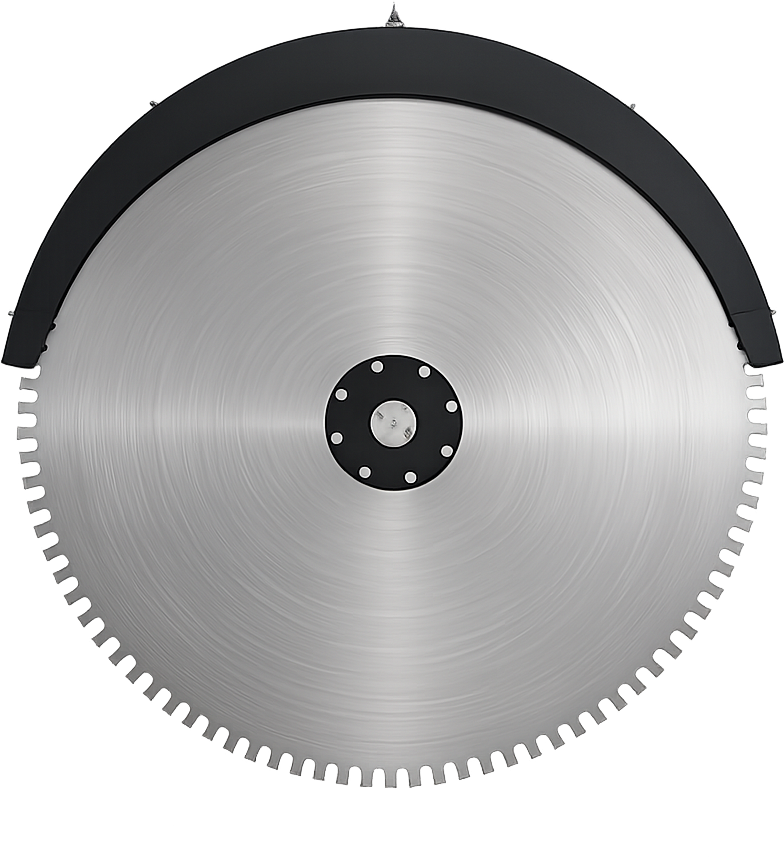
Rock Saw Blades and Diamond Tips
Custom Solutions
Can't find the ideal rock saw for your application?
We provide custom solutions to all our customers and offer rock saws that you can take advantage of.